Stock replenishment
In-line road, trail and court SKUs with published size runs. Quotes return within one business day when the last and season are named.
Program desks separate branded replenishment from private-label work so last, drop and marking methods stay attached to the purchase order. Sampling is scheduled against a written calendar rather than a verbal promise.
Buyers typically arrive with a channel mix: retail doors that need in-line colorways, e-commerce that needs width notes, clubs that need sublimation or embroidery on tongues and boxes, and brand OEM that needs a tech pack. Each path uses the same QC gates, but the document pack changes.
Open a program brief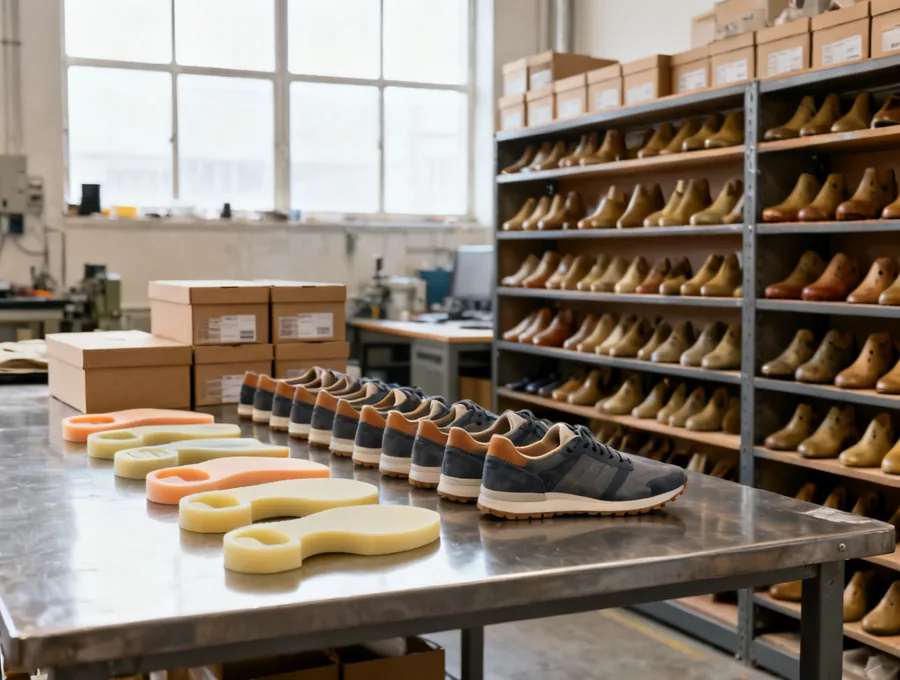
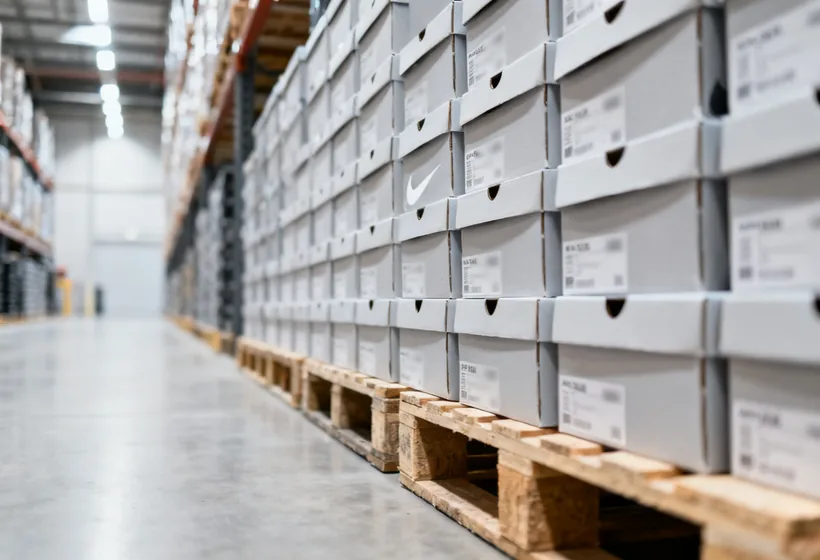
A sporting-goods wholesaler needed winter trail pairs without freezing summer road replenishment. The desk issued a two-calendar pack: trail shoes with lugged rubber and optional PU membrane, plus road trainers with EVA midsoles already in the last library. GORE-TEX was offered only where a membrane bootie was specified; DWR-only uppers were labelled as water resistant, not waterproof.
The first replenishment used a photographed QC gate on outsole flash and bonding. Subsequent drops reused the same last codes so width complaints did not restart the fit conversation.
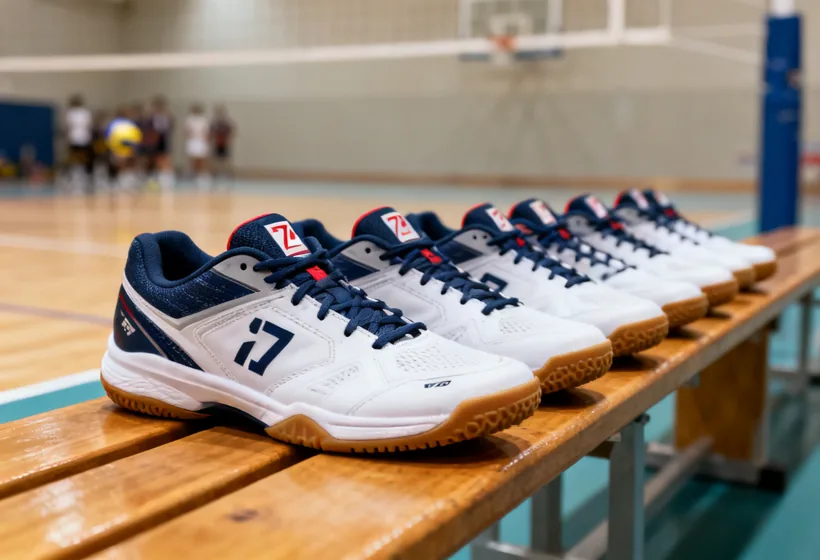
A club buyer wanted women upcourt volleyball shoes with player marks. Screen print was cheaper on small lots; sublimation held up better on engineered knit tongues after repeated wash tests. The program stayed on the existing last so the team did not split sizes across two shapes mid-season.
Embroidery was reserved for leather-like overlays. Knit panels stayed on sublimation or heat transfer so stitch holes would not become tear starts during lateral cuts.
Name the channel, annual pairs, last preference and whether marks are branded, sublimated or embroidered. Target market (US / EU / UK / AU) decides which kids and textile files travel with the carton.
A form is an inquiry, not a production slot. Cutting starts after last, colorway and MOQ are countersigned.